What Vector Engineer does, and the few words it uses.
The idea
Vector Engineer runs stage-gate projects from the bottom up. Every piece of work is a deliverable with one owner, who agreed to its date. The schedule is calculated from those promises, not drawn by a planner. When something slips, everyone downstream sees why, and who owns the delay. Every request, promise, signature and gate decision stays on the record.
Every deliverable goes through five steps
Request itWhat's needed, from whom, and by when
Promise itThe owner accepts, or proposes a date they can hit
Work itThe definition of done, files and versions as it moves
Sign itSomeone else signs it complete, and technically correct where needed
Pass the gateThe gatekeeper decides Go, Hold, Recycle or Kill
Getting around
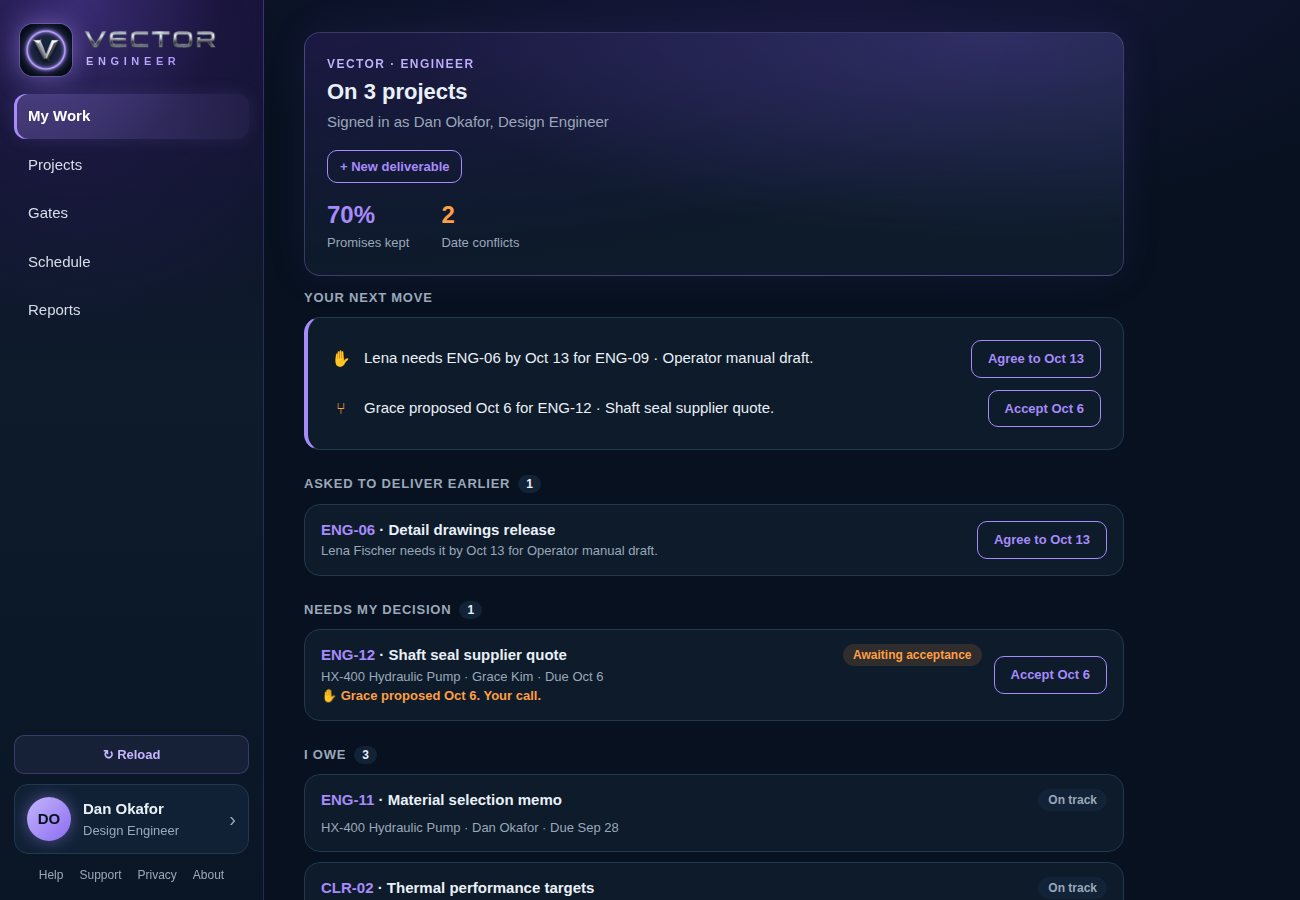
My WorkWhat's waiting on you
ProjectsLists the projects you can see, with their teams and their reviews
GatesShows each project's gates and what's left before each one
ScheduleThe calculated timeline
ReportsHolds each project's Gate 6 report and, for leadership, the company report
Gates and Schedule open on the project you last opened, and closed and killed projects are folded away at the bottom of the lists. On the web these are down the left side, with Company setup for admins, leadership and the gate-process owner, and Settings opens from your name at the bottom left. On iPhone, My Work, Projects, Gates, Schedule and Settings are tabs along the bottom, and reports open from Projects and from each project.
vectorxpro.com/engineer/app
Three words to know
Date B is the date the owner committed to finish. Duration X is the owner's own working time, so their latest start is Date B minus X. Date A is when a piece of work is needed by the work that depends on it.
Everything is numbered from the project's code, so anyone can find it: deliverables ENG-05, reviews ENG-R3 (R for review), findings ENG-F11 (F for finding) and defects ENG-D2 (D for defect).

 Engineer